
On the occasion of the 58th Venice Biennale, THE POOL NYC presents NOTTURNO PIÚ, a group show curated by Giacinto Di Pietrantonio.
There are the ones who see the nocturne in Giotto’s Comet, in San Pietro’s Liberation by Raffaello, in Tintoretto’s work, or even in the Two Men who contemplate the moon by David Caspar Friedrich. Others, in poetry like To the Moon by Giacomo Leopardi, in Whistler’s golden blue color, in the solar stars by Van Gogh, or in futuristic works by Balla and Boccioni. We could go back and forth from dawn to dusk in drawing up the list of artworks whose subject or setting is the night. Certainly, the night was very much courted by the romantics, an era in which the nocturne (nocturne en français) was born. First as a musical work, a form of free, sweet and moderate music that linked up with the serenade. Chopin wrote 21 Nocturnes, Beethoven cheers us with the Moonlight Sonata, even Satie and Debussy did not escape the enterprise. Even literature did not miss the night and the Nocturne as Theodor Amadeus Hoffmann or even Leopardi with the Night Song of a wandering shepherd from Asia. The invitation to the present Notturno Piùexhibit is borrowed from the first cover of the Notturno book, a collection of intimist pizzini written blindfolded because of wounds by the great poet Gabriele D’Annunzio. It is in this evocative frame that we inscribed information and artists’ names for the Notturno Piùexhibition. They are the ones whose work allows returning with the imagination and the memory in the night, in that space time border in which the imagination expands confidentially with the poetics of Mario Airò, Atelier Biagetti, Laura Baldassari, Bertozzi & Casoni, Michel Courtemanche, Mariella Bettineschi, Tomaso Binga, Stefano Cerio, CTRL ZAK, Eteri Chkadua, Jan Fabre, Patrick Jacobs, Ugo La Pietra, Lorenzo Marini, Maria Teresa Meloni, Alessandro Mendini, Aldo Mondino, Francesca Montinaro, Fabio Novembre, Maurizio Orrico, OVO, Paola Pivi, Sarah Revoltella, Jonathan Rider, Andrea Salvatori, Denis Santachiara, Federico Solmi, Giuseppe Stampone, Patrick Tuttofuoco, Vedovamazzei, Alice Visentin.
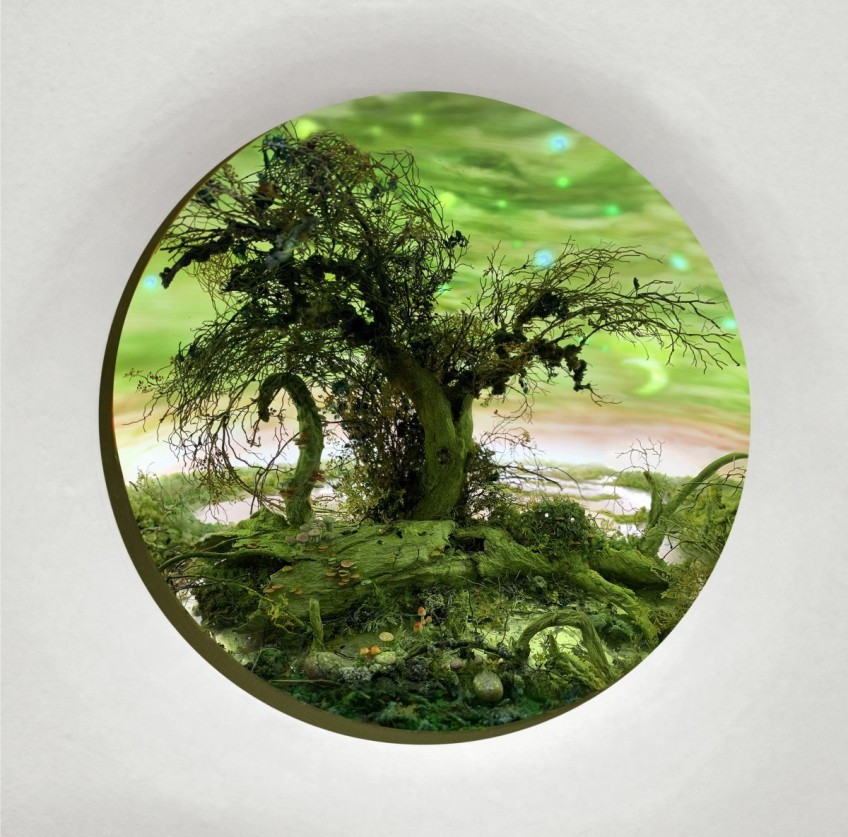
Ours is not only nocturne, it’s Notturno Più. As night and nocturne are also understood in the form of Blues and Jazz; not only because of the music of the soul, but because of the possibility of jam sessions that offer above all the second. Therefore, it’s an exhibition that is free and mildly moderate, intended as a musical score and set up in a scene writing mode as Carmelo Bene liked to say. A writing – an exhibition in which each artist enters himself and his different work as a composition of a collectively diversified vision with his own unique and complex poetics. The original ones by Mario Airò, the hospitable luxury by Atelier Biagetti, or portraits from the hidden physiognomy of Laura Baldassari‘s lysergic painting, Bertozzi & Casoni’s ceramic realism, the plastic skill of Michel Courtemanche, Mariella Bettineschi’s double feminine gaze, Tomaso Binga’s feminist alphabet, Stefano Cerio’s non-photographic places, the overturned project of CTRL ZAK, the painting testimony of the myths and everyday life of Georgia by Eteri Chkadua, the metamorphic melancholy now blue by Jan Fabre, the meticulous and silent Lilliputian dioramas of Patrick Jacobs, the critical architectural landscape reflections of Ugo La Pietra, the chromatically and futuristically mobile alphabets by Lorenzo Marini, the detailed and ancient portraits by Maria Teresa Meloni, the abstract-futurist signs-decorum by Alessandro Mendini, the illuminating ironic sculptures by Aldo Mondino, the potted plants that hide sculptures of migrant environments by Francesca Montinaro.Fabio Novembre’s tension towards the useless, the abstract-informal paintings by Maurizio Orrico, the precariously hardcover project by OVO, the expansive sign energy of Paola Pivi, the sculptural portraits of the polarized families by Sarah Revoltella, the discrete and almost invisible environmental sculptures by Jonathan Rider, the cosmic vases by Andrea Salvatori, the animated-figured project by Denis Santachiara, the exuberant, noisy and ironic works of Federico Solmi, the responsibly ethical drawings by Giuseppe Stampone, the re-reading of the daily visual codes in the light of the multidisciplinary nature of Patrick Tuttofuoco, the ironic and arrogant landscapes by Vedovamazzei, the playfully shamanic paintings by Alice Visentin.
With this diversity made of 31 artists, the exhibition is an expressive chorus of poetics, techniques, materials that form Notturno Più, where the Più (Plus)is no longer just for the night, but the day and night together, like our life, they can no longer be solitary. This is a group show, an exhibition practice in which you need to be at least in two, the one and the other. Starting a community that counts 31 others, 31 artists with countless works to us, as to them, necessary both day and night to be found in the Notturno Più.
WHERE:
THE POOL NYC at PALAZZO CESARI MARCHESI
Campo Santa Maria del Giglio
Calle Rombiasio 2539 Venezia. Vaporetto Stop: GIGLIO
WHEN:
Opening Reception: Tuesday, May 7th, from 6 to 9 pm
8 May-15 June 2019
Open daily: 11-7
INFO:
+393356251723
+393337891947
thepoolnewyorkcity.com
@thepoolnyc
THE POOL NYC, Palazzo Cesari Marchesi, Calle Rombiasio 2539, Campo Santa Maria del Giglio, Venezia
3 April – 31 May 2019
Opening Reception: Tuesday, April 2nd, from 6 to 9 pm
THE POOL NYC presenta Ikebana Rock’n’Roll, la personale del Maestro della Ceramica Contemporanea, Andrea Salvatori, in conversazione con Giulio Turcato, uno dei principali esponenti dell’Astrattismo Informale Italiano.
THE POOL NYCpresenta Ikebana Rock’n’Roll, la personale del Maestro della Ceramica Contemporanea, Andrea Salvatori, in conversazione con Giulio Turcato, uno dei principali esponenti dell’Astrattismo Informale Italiano.
Salvatori plasma da sempre la ceramica, materiale inorganico, assai duttile allo stato naturale e rigido dopo la cottura. Se nel 2009, agli esordi con la galleria, l’artista proponeva lavori in cui associava inserzioni in ceramica a pezzi trovati in mercatini d’antiquariato, adesso, per la prima mostra nella sede milanese, esordisce con una serie di vasi spumosi, carichi di materia, formosi, pieni di ritmo e poesia.
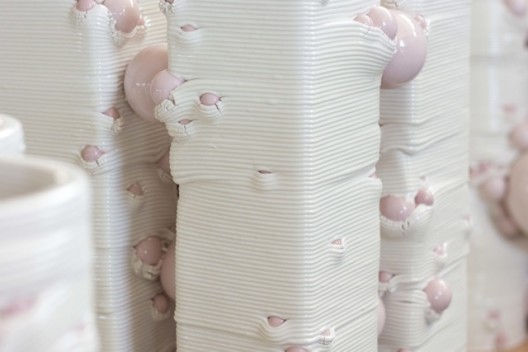
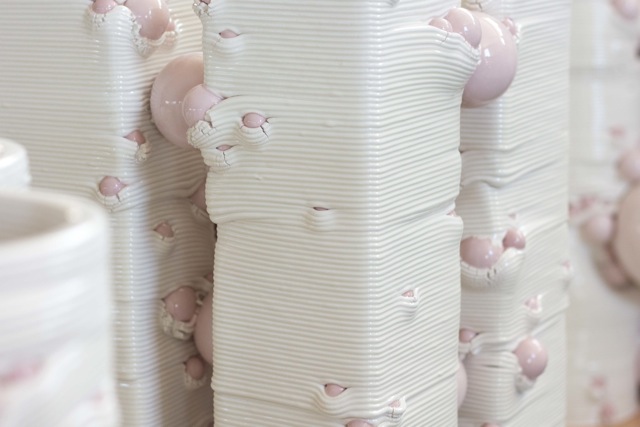
Per Ikebana Rock’n’RollAndrea Salvatori presenta una serie di vasi bianchi con sfere di diversi toni di rosa, inserite come note musicali,a volte più ritmate, altre più calme. Questi lavori sono pensati come Ikebana, dove natura e spirito si fondono nel tentativo di associare la spiritualità orientale con una leggerezza minimale. L’Ikebana utilizza fiori, rami ed altri elementi naturali per realizzare composizioni di grande bellezza.
“La ricerca dell’equilibrio tra tutti gli elementi passa anche dal contenitore. Ci sono numerose scuole di Ikebana e ognuna opta per un arrangiamento particolare. Alcune usano vasi alti e linee verticali, altre invece contenitori poco profondi”. Infatti i lavori dell’artista faentino hanno dimensioni e forme diverse e il vaso abbraccia così il concetto di scultura con una funzione ben precisa.
Per ladisposizione pratica dei fiori si punta all’asimmetria, tratto caratteristico del lavoro di Salvatori, il quale crea con la ceramica un’armonia speciale,Allegro, Grave, Vivace, Moderato,proprio come nelle composizioni musicali. Alcuni lavori sono più tormentati, più pieni, rock, altri più poetici, più vuoti.
Quello tra Andrea Salvatori e la stampa 3D è un confronto inedito, esuberante e al contempo composto, fatto di fugaci imperfezioni e di pause ragionate, che origina da un’innata conflittualità tra creazione umana e artificio tecnico, tra uomo e macchina. La macchina, in questo caso, è la stampante Delta WASP 40100 Clay, progettata da WASP per essere al fianco dei ceramisti durante tutto il processo artistico, ripensando radicalmente l’ideazione dell’opera grazie alle innovative opportunità offerte dalla fabbricazione digitale.
La stampa 3D è il simbolo di una nuova corrente artistica, frutto di repertori digitali unici e tuttora non sondati dall’arte contemporanea. La collaborazione tra WASP e il Maestro si prefigge di delineare inediti scenari artistici, in cui routine meccaniche e gestualità scultoree coesistono nel dialogo compositivo dell’opera. Salvatori concepisce questo rapporto con un’intuizione estremamente affascinante: manomettere la perfezione della stampa con una miscellanea di inserzioni ceramiche. Il processo di deposizione del materiale e di incastonatura delle sfere è tema centrale nella collezione Ikebana Rock’n’Roll, al punto da convincere Salvatori a denominare le opere “Composizione 40100”, come scaturite da un dialogo musicale dalle tonalità più svariate.
L’artista sconvolge l’algoritmo reiterato pedissequamente dalla macchina con accenti musicali imperfetti, frutto di volta in volta di azioni spontanee e processi ragionati.
Sorge naturale associare le sculture di Salvatori ai dipinti di Turcato: due sperimentatori in fatto di materia.
Giulio Turcato, una presenza costante a La Biennale di Venezia, ha indagato per tutta la vita la materia, usando fluorescenze, pastiglie, sabbie, acrilico e olio.
Nel 1947 Turcato è tra i firmatari di FORMA 1, dove esprime un interesse per una pittura formalista. Nel 1956, dopo un viaggio in Cina, forti sono i riferimenti agli ideogrammi, da cui la nascita dei cosiddetti Reticoli, un trionfo di forme attraverso il colore, che assume una valenza astratta in relazione proprio con se stesso. Col passare degli anni l’artista tende all’assenza della forma.
Agli inizi degli anni ’60 Giulio Turcato viene colpito dalle nevrosi contemporanee e inserisce nei suoi lavori i Tranquillanti, giocando con la materia pittorica e dando vita a composizioni brillanti, astratte, tutte con un piglio musicale. Negli anni delle conquiste spaziali il Maestro inventa opere con sabbie colorate cangianti affermando “la mia ricerca coloristica è orientata verso un nuovo colore…”. È del 1964 la prima Superficie Lunare, realizzata con una striscia di gommapiuma lavorata e combusta. Sarebbe soddisfatto di vedere oggi i toni che hanno assunto i colori da lui medesimo creati.
Nei lavori dell’artista nato a Mantova e mancato a Roma c’è un acceso ritmo informale generato dalla diversità dei materiali usati nelle fasi della sua produzione. THE POOL NYC propone una selezione di opere che spazia dai Reticoli, alle Superfici Lunari, ai Tranquillanti,fino agli Arcipelaghi.
Ikebana e Rock’n’Roll sono in totale contrasto: il primo legato alla spiritualità, il secondo al ritmo di vita terreno e festaiolo. Tutto quanto esiste in natura può essere trasformato in materiale compositivo, purché interpretato nella sua essenza di elemento naturale, riordinato e riespresso e, da inerte, reso vivente. All’origine è dunque la natura, fonte inesauribile di materia prima, modello perfetto che l’uomo può imitare e che l’artista non deve contraffare. Non dimentichiamo che la natura non ripete mai identica una stessa forma, pur moltiplicandola in una quantità potenzialmente infinita.
THE POOL NYC presents Ikebana Rock’n’Roll, the solo show by the Master of Contemporary Ceramics, Andrea Salvatori, in conversation with Giulio Turcato, one of the main exponents of Italian Informal Abstractism.
Salvatori has always molded ceramics, an inorganic material that is very ductile in its natural state and rigid after cooking. Since his debut with the gallery in 2009, where the artist proposed works in which he associated ceramic inserts to pieces found in antique markets, till this first exhibition in the Milanese Gallery, he shows a series of foamy vases, full of matter, curvy, loaded with rhythm and poetry.
For Ikebana Rock’n’RollAndrea Salvatori presents a series of white vases with spheres of different shades of pink, inserted as musical notes, sometimes more rhythmic, sometimes more calm. These works are conceived as Ikebana, where nature and spirit merge in an attempt to associate Oriental spirituality with minimal lightness. Ikebana uses flowers, branches and other natural elements to create compositions of great beauty.
“The search for balance between all the elements also passes through the container. There are numerous schools of Ikebana and each one opts for a particular arrangement. Some use tall vases and vertical lines, others use shallow containers.” In fact the works of the artist from Faenza have different dimensions and shapes and the vase thus embraces the concept of sculpture with a very specific function.
For the practical arrangement of the flowers, the aim is asymmetry, a characteristic trait of Salvatori’s work, which creates a special harmony with ceramics: Allegro, Grave, Vivace, Moderato, just like in musical compositions. Some works are more tormented, fuller, rock, others more poetic, empty.
The one between Andrea Salvatori and 3D printing is a new and exuberant confrontation, made of fleeting imperfections and reasoned pauses, which originates from an innate conflict between human creation and technical artifice, between man and machine. The machine, in this case, is the Delta WASP 40100 Clay printer, designed by WASP to be at the side of the ceramists throughout the artistic process, radically rethinking the conception of the work thanks to the innovative opportunities offered by digital fabrication.
3D printing is the symbol of a new artistic current, the result of unique digital repertoires and still not probed by contemporary art. The collaboration between WASP and the Maestro aims to outline new artistic scenarios, in which mechanical routines and sculptural gestures coexist in the compositional dialogue of the work. Salvatori conceives this relationship with an extremely fascinating intuition: to tamper with the perfection of printing with a miscellany of ceramic insertions. The process of depositing the material and setting the spheres is a central theme in the Ikebana Rock’n’Roll collection, to the point of convincing Salvatori to name the works “Composition 40100”, as if they originated from a musical dialogue of the most varied tones.
The artist alters the repeated algorithm with imperfect musical accents, as a result of spontaneous actions and reasoned processes.The first Lunar Surface dates to 1964 with a strip of processed and burnt foam rubber. He would be pleased to see today that tones have taken on the colors he created himself.
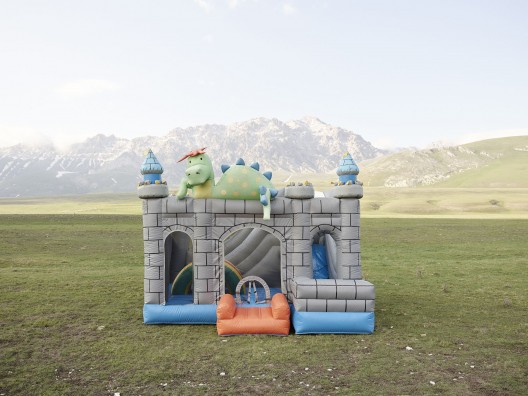
Stefano Cerio, Aquila.
Con Saluti dall’Abruzzo di
Giuseppe Stampone
SABATO 23 MARZO DALLE 17 in galleria
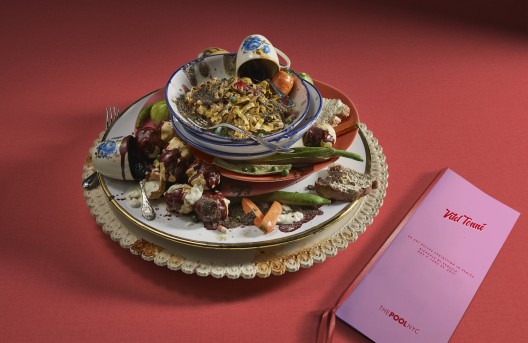
An Art Recipe Exhibition in Venice
THE POOL NYC at Palazzo Cesari-Marchesi
Calle Rombiasio 2539,
Campo Santa Maria del Giglio, Venezia
MAY 9-JUNE 25 2017
Vitel Tonné is a Piedmontese dish of cold, sliced veal covered with a creamy, mayonnaise-like sauce that has been flavored with tuna; it is also known as “the main course of an Italian meal or as an exceedingly elegant antipasto for an elaborate dinner”, Marcella Hazan, the famous authority on Italian cuisine, states.
Veal + tuna + mayonnaise, separately strong ingredients, with solid flavour, compose a great dish. According to canonical parameters on cooking, Vitel tonné should not exist, Fish + Meat = Forbidden! And if it did not, Italian cuisine would be sorely lacking.
But, there is always an exception, and it’s the peculiar nature that gives birth to a genius dish.
This culinary introduction, might sound like an odd premise for an art show, but it is only too appropriate for the organic exhibition that THE POOL NYC is presenting for this 2017 Venice Biennale at Palazzo Cesari-Marchesi.
We are proud to serve a selection of junk media and free range artists, very spicy and from various countries, all belonging to the same kitchen of ART.
Art, as we see it, is the Grande Cucina with many chefs, all with their own unique sense of personality, humor, fantasy, intelligence, sensitivity.
There is a common denominator that let arts stick together, even being from different centuries and origins, as it happens in magical recipes.
THE POOL NYC is happy to marinate, in the rooms of an old Venetian Palace of the XVIII century, a wide selection of Modern and Contemporary artworks for a digestible show.
Walking through the salons of the palazzo will entertain your eyes, will stimulate your spirit, and will nourish your cultural avidity. Every room is filled with a specific medium in order to satiate your need of ceramic, figurative painting, or photography without additives. Your artistic hunger will be satisfied by slicing every single work of art installed within the Palazzo.
The Menu is rich of interesting dishes, made of contemporary dairy free ceramic, organic paintings of the XX and XXI Century served in an old building.
This explosive dressing will regenerate your stomach. It will be a shake of artworks, to savor all together, or each separately. You can start with a vegan antipasto of photography and end with a glazed ceramic dessert.
The main salon, garnished with stuccos, hosts a convivial long table, where the whole art family, will peacefully dine, exchanging opinions despite their different nature.
In Italy we experience the Cuisine not just as a survival or Epicurean moment, but as a situation where we get together. We don’t care about nationality, dairy products, color, vegetarianism, taste, Extra Virgin Olive Oil, size, veganism, age, medium, political views, feminism, spacialism, abstract art, pop-art, we can live together and devour it all.
This is a gluttonous experience, and we are pleased to share it with you.
Il Vitel Tonné è un piatto tipico piemontese realizzato con il girello di vitello e la salsa tonnata. Si può guarnire con capperi e limone.
Vitello, tonno e maionese, ognuno con un sapore forte, danno vita a una ricetta favolosa.
Seguendo i canonici parametri della buona Cucina, il Vitel Tonné non dovrebbe esistere perché Carne + Pesce = Divieto Assoluto! Ma ecco l’eccezione che conferma la regola.
Questa introduzione culinaria potrebbe apparire bizzarra per una mostra d’arte, ma è assolutamente adatta per la organic exhibition che THE POOL NYC presenta a Palazzo Cesari-Marchesi in occasione della 57esima edizione de La Biennale di Venezia.
Acquolina in bocca per i più avidi collezionisti. Si tratta di una mostra ghiotta: vetri, ceramica, pittura, astratta e figurativa, video, installazioni, fotografia, disegni, acquerelli, diorami; una visione dell’arte come esperienza golosa, adatta a palati sopraffini.
Siamo orgogliosi di servirvi una selezione di junk media e artisti liberi, assai speziati e di varia provenienza, tutti però appartenenti alla stessa Cucina dell’Arte.
L’arte, per come la intendiamo, è la Grande Cucina con tanti cuochi, ognuno con la propria personalità, humor, fantasia, intelligenza e sensibilità.
Un comune denominatore fa sì che le arti, sebbene di secoli e luoghi diversi, ben convivano, proprio come nelle migliori ricette di cucina.
Nelle stanze di un antico palazzo veneziano del XVIII secolo, THE POOL NYC è felice di marinare un’ampia selezione di lavori di Arte Moderna e Contemporanea per una mostra davvero sfiziosa.
Camminare all’interno dei saloni del palazzo attrarrà i vostri occhi, stimolerà lo spirito e nutrirà la vostra avidità culturale. Ogni stanza è farcita d’arte per saziare il vostro bisogno di installazioni multimediali, di pittura figurativa, o di diorami senza conservanti.
Questo menu esplosivo vi rigenererà. Potrete cominciare con un antipasto di fotografia e finire con una spuma di ceramica invetriata.
La sala principale, guarnita con stucchi, ospita un banchetto dove l’intera famiglia dell’arte mangerà insieme, scambiando convivialmente opinioni.
In Italia siamo abituati a mangiare non tanto per sopravvivere o per il piacere del palato, ma soprattutto per stare insieme, come atto simposiaco. Non importa la nazionalità dei partecipanti, la loro età, il colore, l’appartenenza a una corrente artistica, che siano vegetariani, figurativi, o biodinamici; non discriminiamo nessuno per le visioni politiche o i media utilizzati; siamo aperti al Femminismo, allo Spazialismo, all’Astrattismo, alla Pop-Art; usiamo Olio Extra Vergine d’Oliva e acrilico; ci ritroviamo tutti insieme allegramente e divoriamo tutto quel che ci viene proposto.
Preparatevi a un’esperienza golosa, che noi siamo felici di condividere con voi.
Artists:
Ercole Barovier, Gina Beavers, Bertozzi & Casoni, Giacomo Cappellin, James Case-Leal, Eteri Chkadua, Marcel Dzama, Giorgio Ferro, Stefania Fersini, Piero Fogliati, Luigi Ghirri, Piero Gilardi, Giorgio Griffa, Riccardo Guarneri, Patrick Jacobs, Austin Lee, Sol LeWitt, Aldo Mondino, Niccolò Montesi, MVM, Luigi Ontani, Jonathan Rider, Andrea Salvatori, Antonio Scaccabarozzi, Carlo Scarpa, Peter Schuyff, Archimede Seguso, Bianca Sforni, Federico Solmi, Giuseppe Stampone, Fratelli Toso, Giulio Turcato, Ludwig Wilding.
Address:
Calle Rombiasio, Campo Santa Maria del Giglio, 30124 Venezia.
How to find us:
Once in Campo Santa Maria del Giglio, walk opposite to Canal Grande, pass the church of Santa Maria del Giglio on the left and Tessitura Bevilacqua on the right, following THE POOL NYC stickers.
Vaporetto stop: S. Maria del Giglio (same stop of the Gritti Palace)
Water access: Rio de l’Alboro (aka Rio de le Ostreghe)
Hours of Operation: daily 11 am – 7 pm and by appointment
Vernissage and Opening Reception: 9th May 2017 at 6 pm.
#thepoolnyc
#viteltonnevenezia
A special Thanks to Scaramouche NY for their collaboration
A Solo Show in NYC
Patrick Jacobs intentionally blurs boundaries between the traditional artistic media of painting, sculpture and photography in his works. At the same time, they present the viewer with a spatial and perceptual conundrum; we are drawn into a space at once determinate and infinite, natural and contrived, prosaic and otherworldly.
Jacobs draws inspiration from sources as diverse as historical landscape painting and contemporary chemical companies home and garden pest control brochures, such as Chevons Ortho Books. Recalling the Claude glass, an optical device popular in the 18th century used to frame the picturesque, the lenses invoke the invisible eye of the wary homeowner searching an otherwise vacant domestic landscape for imagined interlopers. Ortho, Greek for correct, further alludes to the unending quest to control any divergence from the norm, as well as the manipulation of our sense of perspective. With such a fusion of influences, these quiet compositions offer a magical view of the mundane. Here, reality has been de-familiarized, and the uncanny has supplanted the commonplace.
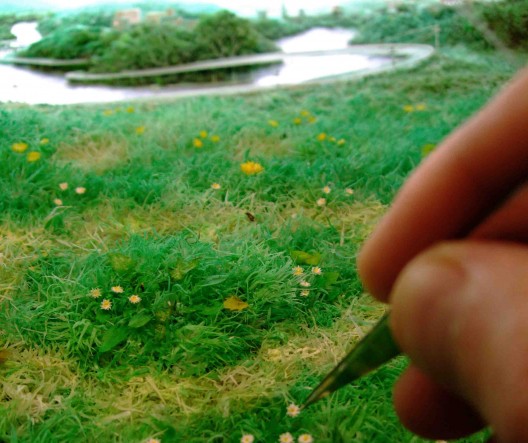
Each work consists of a meticulously constructed, three-dimensional diorama installed within the wall and viewed through a circular window of glass lenses. The combination of the negative focal length of the lenses and sculptural foreshortening creates the illusion of seemingly infinite depth within the limitations of a narrow space. The result is a distorted reality corrected only when seen through the lenses. Though artificial, these worlds are nevertheless strangely real and tactile.
Whereas painters using the Claude glass sought highly picturesque moments, Jacobs dioramas tend to depict banal and subtle scenes, places often overlooked, such as a field with an anthill or the view out a window over a radiator. This exhibition will include four works from Jacobs interior series. In each, an imaginitive birds eye view of the Gowanus Heights from the artists apartment in Brooklyn, NY produces a spatial progression from interior to exterior as well as the impossible effect of simultaneous close-up and distance.
Jacobs draws inspiration from sources as diverse as historical landscape painting and contemporary chemical companies home and garden pest control brochures, such as Chevons Ortho Books. Recalling the Claude glass, an optical device popular in the 18th century used to frame the picturesque, the lenses invoke the invisible eye of the wary homeowner searching an otherwise vacant domestic landscape for imagined interlopers. Ortho, Greek for correct, further alludes to the unending quest to control any divergence from the norm, as well as the manipulation of our sense of perspective. With such a fusion of influences, these quiet compositions offer a magical view of the mundane. Here, reality has been de-familiarized, and the uncanny has supplanted the commonplace.
Each work consists of a meticulously constructed, three-dimensional diorama installed within the wall and viewed through a circular window of glass lenses. The combination of the negative focal length of the lenses and sculptural foreshortening creates the illusion of seemingly infinite depth within the limitations of a narrow space. The result is a distorted reality corrected only when seen through the lenses. Though artificial, these worlds are nevertheless strangely real and tactile.
Whereas painters using the Claude glass sought highly picturesque moments, Jacobs dioramas tend to depict banal and subtle scenes, places often overlooked, such as a field with an anthill or the view out a window over a radiator. This exhibition will include four works from Jacobs interior series. In each, an imaginitive birds eye view of the Gowanus Heights from the artists apartment in Brooklyn, NY produces a spatial progression from interior to exterior as well as the impossible effect of simultaneous close-up and distance.

Mongolia
Entanglements: Connectivities Across Borders
Commissioner: Commissioner Sainbayar Surenkhuu, Senior Advisor to the Minister of Culture, Sports, Tourism and Youth of Mongolia
Curators: Uranchimeg Tsultem, Thomas Eller
Exhibitors: Gerelkhuu Ganbold, Dorjderem Davaa, Nomin Bold, Tuguldur Yondonjamts
Venue: Squero Castello, Salizada Streta 368
Featuring multimedia works by four leading Mongolian contemporary artists – Nomin Bold, Gerelkhuu Ganbold, Tuguldur Yondonjamts and Dorjderem Davaa – the Mongolia Pavilion explores the historical and cultural entanglements across Eurasia, where the Mongols were important agents. Drawing on new scholarship in global art history, the pavilion reimagines Mongolia not as a fixed geography but as a dynamic space of exchange, inclusion, and transformation.
Set in Venice – home to 13th-century figures like Marco Polo and Pietro Veglione, who forged key alliances with the Mongols – the pavilion bridges imperial-era networks with today’s climate of division, offering a counter-narrative rooted in shared histories, cross-cultural thinking, and creative resilience.
The four artists, each a celebrated and a prominent voice in Mongolian contemporary art, explore shared themes and concepts, such as cyclicality of life and death, invisible realities, Eurasian mythologies, nomadic cosmologies with the focus on religious tolerance, material exchange, and the porous boundaries between humans, nonhumans and landscapes — values long embedded in Mongolian culture.
The pavilion contributes a vital voice to the Biennale’s theme highlighting Mongolian artists’ role in turbulent times for a connected world.

THE POOL NYC is happy to host HdM Gallery, presenting A Tangled Tale, the first solo exhibition of Marcel·la Barceló in Milan. Curated by Lucia Pesapane, the exhibition will be open from April 28th to May 8th.
A Tangled Tale
Water is key element in Marcel·la Barceló’s work. It flows through, seeps into and liquefies forms. A primordial, ambivalent and unstable, it serves both as visual motif and a conceptual principle that runs through her pictorial practice.
A source of life as much as a force of destruction, water is conceived as a matrix: we come from it, we carry it within us, and yet it remains an environment in which we cannot live.
This juxtaposition is fundamental to her.
In many cosmologies, water represents the primordial chaos from which the world materialises. Much of Marcel·la Barceló’s practice develops from this view. Her figures seem to emerge from an initial magma that she often compares to the birth of Venus as recounted by Hesiod: a mixture of foam, blood and semen.
Nothing is premeditated in her canvas: no preparatory sketches, no composition. Materials come together, blend, and clash. Stains spread, drips branch off, and chance takes the lead. Some shapes disappear; others endure. The painting becomes a field of metamorphoses where nothing is ever entirely static. This fluid approach is also evident in the brushwork. The rolling lines, curves and movements evoke the surface of water rippled by the wind. The depths of the sea interact with the infinity of the sky; foam and clouds seem to be part of the same shifting matter.
Everything is in flux.
Marcel·la Barceló thus explores the contrast where the spatiality of water meets that of dry land. This line of contact — horizon or shoreline— frequently appears in her paintings, but the artist does not merely depict it; on the contrary, she seeks to disrupt it. If the earth embodies the principles of stability and rationality, Marcel·la Barceló proposes to flood this conceptual framework and adopt a different perspective; to conceive of our relationship with the world not from the solidity of the earth, but from the fluidity of water – viewing the earth from the sea. On the surface of the water, the visible world refl cts and distorts into unstable images, merging with the invisible that swarms beneath the surface.
Like Narcissus confronting his own reflection, the viewer is drawn in. Invited to cross that iridescent surface and step into another world — the one hidden on the other side of the mirror, as imagined by Lewis Carroll, to whom the exhibition’s title, A Tangled Tale, pays homage. The short stories written between 1880 and 1885 by the British author and collected under this title are constructed as a series of puzzles to be unravelled, creating a labyrinthine narrative. This non-linear thinking is reflected in the artist’s universe, made up of networks and interweaving threads: a world that is both familiar and inaccessible, where every thread of one story becomes entangled with another, and where every story may become a puzzle.
But in Marcel·la Barceló’s Eden, unease never ceases. A line twists; a tree branch transforms into a vortex. A wolf lurks somewhere. Dragonflies and birds of enormous proportions appear, menacing.
Reality eventually cracks, and water can flow freely without restraint.

THE GLASS AQUARIUM
6 May-22 November 2026
Opening reception May 6th at 6 pm
Opening Hours: Thursday-Sunday 3-7 pm
and By Appointment
THE POOL NYC presents The Glass Aquarium, an exhibition dedicated to the great masters of glass: Lino Tagliapietra, Tristano di Robilant, Maria Grazia Rosin, and Dale Chihuly presented within Marriage of the Sea (Il Ratto di Venezia), a site-specific installation by Austin Young at Palazzo Cesari Marchesi. Originally conceived for Venice in 2024, Marriage of the Sea continues to transform the piano nobile into an immersive environment, forming the spatial and conceptual framework within which the exhibition is presented.
The exhibition is set to be a celebration of artists working in glass. Tagliapietra and Chihuly, have worked together, creating unprecedented forms and techniques born from the genius of both minds. Two world-renowned masters, they continue to inspire younger generations.
From the next generation in the global glass scene, Maria Grazia Rosin and Tristano di Robilant are essential presences. Maria Grazia brings creatures of the deep into domestic spaces, hanging or resting on tables, working with extraordinary mastery in opaline glass, mirrored surfaces, and all the chromatic mysteries that Murano glass can offer.
Tristano speaks through poetry and literature with his siliceous forms. Together with Maestro Zilio, he translates ideas from his mind into drawings that are then brought to life in a single breath.
Lino Tagliapietra, an undisputed master based in Murano, blows glass into masterpieces without sketches or plans, guided purely by breath and mind. He participates with a work that is a hymn to color: shifting brushstrokes of yellow, like the moment you enter underwater and the marine world welcomes you with a light that seems switched on.
Maria Grazia Rosin, a master of rock-like, pulsating, mirrored forms inspired by octopuses, cuttlefish, and deep-sea creatures, remains deeply attentive to the environment that hosts her work, placing it with grace and sensitivity in complete harmony with the palace.
Tristano di Robilant’s sculptures are characterized by harmonious yet enigmatic forms, suspended in space, light and transparent. These elements are essential to understanding the artist’s poetics, which is rooted in a constant tension between the solidity of matter and its apparent weightlessness. Tristano’s creative process begins with an idea that is immediately translated into a drawing, a spontaneous, direct gesture that then takes three-dimensional form in the furnace.
Dale Chihuly, participates with Seaforms, works inspired by marine forms, light and transparency—spirals of color that reveal layered, rhythmic, and flowing structures.
Marriage of the Sea (Il Ratto di Venezia) is a site-specific installation by Austin Young that transforms the piano nobile of Palazzo Cesari Marchesi into an immersive, image-based environment. Drawing from Venetian decorative traditions and allegorical painting, the work presents a layered and kaleidoscopic vision of the city, composed from the artist’s original photographs and archival imagery. Rather than functioning as a backdrop, the installation itself defines the spatial and conceptual framework of the Palazzo, within which The Glass Aquarium is presented. Printed textile surfaces and sheer drapery, composed from the artist’s imagery, activate the architecture, producing a shifting and immersive environment that reconfigures the viewer’s perception of the space.
THE POOL NYC
Palazzo Cesari Marchesi
Calle Rombiasio, 2539
Campo Santa Maria del Giglio
30124 Venezia
thepoolnewyorkcity.com
info@thepoolnewyorkcity.com
@thepoolnyc
Opening Reception: May 6th 6-9 pm
Dates: 6 May-22 November 2026
Opening Hours: Thursday-Sunday 3-7 pm
and By Appointment
+393337891947
+393356251723

THE POOL NYC presents Morbide Macchine Silicee, Maria Grazia Rosin’s first solo exhibition in Milan.
Conceived as a dynamic and intermittent project, it unfolds from April 9th to July 16th, 2026, at Palazzo Fagnani Ronzoni, with a format structured around two solo exhibitions presented at different times.
The first act, conceived as a flash mob in support of glass, opens on April 8th and runs through April 17th.
Rosin revisits her monumental work Gelatine Lux, originally shown at the Museo Fortuny in 2007, sharing with the public the idea that glass can never be fully controlled. In doing so, she reveals its expressive autonomy and seductive force, shaped through principles of flexibility and modulation. This silicon-based material takes form through continuous motion, retaining a component that is never entirely static.
From May 20th to July 16th, the second act of Maria Grazia Rosin’s solo exhibition unfolds, celebrating glass also in its more domestic and ironic dimension.
The installation Gelatine Lux is conceived as a single, large living organism made of water, with bioluminescent alien forms that function as its nervous system.
These creatures take on primitive, timeless biomorphic shapes, evoking oceanic depths and extraterrestrial outer space. They are immersed in an accelerated, fluid motion—like water, plankton, cosmic dust, and suspended particles.
Morbide Macchine Carnivore is presented directly from the Island of San Francesco del Deserto to the heart of the 5 Vie district.
Organic and artificial creatures, inspired by long, sinewy insect-like legs, embody genetic mutations unfolding in the Venetian lagoon. What we see is only the emergent part of beings that have developed under new and extreme ecological conditions. Iridescent green limbs, marked by altered genetic traits, extend from the water, suggesting bodies concealed from view—submerged and partially sunken into the mire.
New works, yet drawn from the Tentacular series, beginning with the octopus, the Venthusiani are modular elements, precious and ever-shifting, in which marine forms and suggestions merge without functional constraints.
The exhibition, animated by the light of Murano and the Venetian Lagoon, also speaks through the photographs of Mario Cresci and Roberta Orio. Cresci, through his abstract images, captures Rosin’s imaginative installation at Palazzo Fortuny, while Orio traces the conceptual and creative development of the Water Art project Morbide Macchine Carnviore.
The exhibition will be accompanied by a critical text by Grazia Quaroni.

Why the sky above belongs to everyone,
and the earth below doesn’t?
The sky belongs to every eye,
and if it likes, each and every one,
can view the moon entirely,
the stars, the comets and the sun.
Every eye can view everything
and nothing is ever lacking there:
the last one who looks at the sky
does not find it less shining.
So please explain to me,
in prose or even verses,
why the sky is only one
and the Earth is all in pieces.
The nursery rhyme “The sky belongs to everyone” by Gianni Rodari inspires Giuseppe Stampone’s solo exhibition at THE POOL NYC gallery in Milan.
Why the sky above belongs to everyone, and the earth below doesn’t?, ironic title, stresses on a view of the sky, imagined as a free space compared to the earth, inhabited by man and therefore divided into private lots. In fact, the sky, which in a less poetic way is called airspace, belongs to the states and is managed accordingly. Dominus soli est dominus usque ad sidera et usque ad inferos (the owner of the land is owner to the underworld and up to the stars) is stated in a Roman Law maxim, slightly mitigated in article 840 of the Italian Civil Code.
If you look in a more attentive way, perhaps with a telescope, you realize that the sky goes even beyond the air routes and that includes the orbits of the satellites, that are occupied, in the sense of occupatio rei nullius (occupation of the nobody’s thing: nobody’s or everybody’s ?) of Roman law, by rich countries to the detriment of the poorest ones. The latter, as of today, do not have the technologies to exploit them. Certainly they will soon have no more available sky.
With this exhibition, Giuseppe Stampone revolutionizes the sky, regenerates it, creates a new one, without political constraints, boundaries, rules: he frees the oil on the foam, chases and lets the blue flow, creator, make up of a new independent firmament. Stampone gives dimension, length, width, density, gives shape to the desire for freedom of man.
The artist shows us another sky, allowing us to buy some of the freedom we see when we look upwards, allowing the viewer to take home a fragment.
The freedom of the great spaces, of the deserts that are not only those of sand but also of water, the oceans, and of air, the sky.
In Giuseppe Stampone’s sky you can abandon yourself without asking for permissions, protocols, or authorizations. You do not need passports to travel in the Stampone’s skies that are free from geopolitical canons.
Man by right is the owner of the sky, but he does not notice that it is taken away from him. Thanks to art we make a sky that belongs to us, a swish of wings that are freed in the painted blue, an absence of borders, walls, customs, absolute freedom, infinite possibilities.
Stampone underlines the importance of the performative gesture with oil painting, intended as a liberating act that allows us to reflect on the current issue of spatial georeferencing.
If it is true that the earth tends to lose its diversity, we risk that the sky reflects the earth more and more.
As in every new project, the artist creates the architecture of intelligence, a participatory platform, where he unites mind, body and space, mind, body and network. In this case his network, as he has been doing for years, is made up of artists who share their work and participate in a common project. In a globalized and homologated era the uniqueness of each identity becomes indispensable to recreate a world that is both shared and unique.
For Why the sky above belongs to everyone, and the earth below doesn’t? Giuseppe Stampone asked Paola Angelini, Luigi Carboni, Fabrizio Cotognini, Matteo Fato, Ugo La Pietra, Maria Morgagni, Marco Neri, Paolo Parisi, Alfredo Pirri, Eugenio Tibaldi, Gian Maria Tosatti, giving spatial coordinates (30×40 cm), to create a possible sky.
Giuseppe Stampone, 1974, Cluses, France Lives and works between Bruxelles and Rome. Giuseppe Stampone alternates drawings made with BIC ballpoint pen and multimedia installations. His art is a form of political protest and invites the public to reflect on fundamental issues such as immigration, water shortage and war. He established solstizio.org, co-funded by the European Union and developed in various countries, based on artistic interventions in which the new generations deal with global contemporary issues such as environment, social conflicts and sustainable economies. In Solstizio Stampone realized several installations in public spaces with the participation of 30,000 citizens of ten different nations. He collaborates with a number of universities such as the Academy of Fine Arts in Urbino, IULM in Milan, the Federico II University of Naples and the McLuhan Program in Culture and Technology in Toronto. From 2017 he is an Affiliated Fellow of the Civitella Ranieri Foundation of New York and from 2013 of the American Academy of Rome. His work has been exhibited in several Biennials, museums and international foundations including: Architecture Biennial of Seoul, South Korea (2017); Triennale of Ostend, Belgium (2017); 56th International Art Biennale of Venice, Cuban National Pavilion (2015); Biennale of Kochi-Muziris, Kerala, India (2012); 11th Biennial of Havana, Cuba (2012); Liverpool Biennial, UK (2010); 14th and 15th Rome Quadrennial (2004-2008); Fuori Uso, Pescara; Kunsthalle Museum of Art in Gwangju, South Korea; BASE, Florence; Wilfredo Lam Contemporary Art Center in Havana, Cuba; MAXXI, Rome; MACRO, Rome; Sandretto Re Rebaudengo Foundation, Turin; Triennale Bovisa, Milan; The Invisible Dog Art Center, Brooklyn, NYC. Giuseppe Stampone’s solo exhibitions in museums include: CIAC, Foligno (2018); GAMeC, Bergamo (2014), National Institute for Graphics, Rome (2015), Palazzo Reale, Milan (2014).
Since 2014 THE POOL NYC has presented his work in several group exhibitions, and this is the first solo show with the gallery.
PERCHÉ IL CIELO È DI TUTTI E LA TERRA NO?
Il cielo è di tutti gli occhi,
e ogni occhio, se vuole,
si prende la Luna intera,
le stelle comete, il sole.
Ogni occhio si prende ogni cosa
e non manca mai niente:
chi guarda il cielo per ultimo
non lo trova meno splendente.
Spiegatemi voi dunque,
in prosa o in versetti,
perché il cielo è uno solo
e la Terra è tutta a pezzetti.
La filastrocca “Il cielo è di tutti” di Gianni Rodari ispira la mostra personale di Giuseppe Stampone negli spazi di THE POOL NYC a Milano.
Perché il Cielo è di tutti e la terra no?, titolo ironico, pone l’accento su una visione del cielo, immaginato come spazio libero rispetto alla terra, abitata dall’uomo e per questo divisa in spazi privati. Infatti il cielo, che in maniera meno poetica viene chiamato spazio aereo, appartiene agli stati e da questi è gestito. Dominus soli est dominus usque ad sidera et usque ad inferos (il proprietario del suolo è proprietario fino agli inferi e fino alle stelle) recitava un brocardo di diritto romano, recepito in modo più mite dall’articolo 840 del Codice Civile.
A ben guardare, magari con un telescopio, ci si accorge che il cielo va anche al di là delle rotte aeree e che comprende le orbite dei satelliti occupate, nel senso della occupatio rei nullius (occupazione della cosa di nessuno: di nessuno o di tutti?) del diritto romano, da paesi ricchi a discapito di quelli più poveri. Questi ultimi non hanno le tecnologie per occuparle. Certamente presto non avranno più cielo disponibile.
Con questa mostra, Giuseppe Stampone rivoluziona il cielo, lo rigenera, ne crea uno nuovo, autonomo da costrizioni politiche, da confini, da regole: libera l’olio sulla gommapiuma, rincorre e lascia scorrere il blu, creatore, compone un firmamento nuovo e indipendente. Stampone dà dimensione, lunghezza, larghezza, densità, dà forma al desiderio di libertà dell’uomo.
L’artista ci mostra un altro cielo, lascia che sia possibile acquistare un po’ di quella libertà che vediamo quando guardiamo verso l’alto, consentendo allo spettatore di portarsene a casa un frammento.
La libertà dei grandi spazi, dei deserti che non sono solo quelli di sabbia ma anche di acqua, gli oceani, e di aria, il cielo.
Al cielo di Giuseppe Stampone, libero da canoni geopolitici, ci si può abbandonare senza chiedere permessi, protocolli, o autorizzazioni.
L’uomo per diritto è proprietario del cielo, ma senza che se ne accorga questo gli viene tolto. Grazie all’arte ci riappropriamo di un cielo che ci spetta, un’assenza di confini, mura, dogane, libertà assoluta, infinite possibilità.
Stampone sottolinea l’importanza del gesto performativo a olio, inteso come atto liberatorio che consente di riflettere sull’attuale questione della georeferenziazione spaziale. Se è vero che la terra tende a perdere le sue diversità, rischiamo che il cielo rifletta sempre di più la terra.
Come in ogni suo nuovo progetto, l’artista crea l’architettura dell’intelligenza, una piattaforma partecipativa, dove unisce mente, corpo e spazio, mente, corpo e network. In questo caso il suo network, come fa da anni, è formato da artisti a cui chiede una formalizzazione partecipativa da condividere. Per Stampone la pratica della partecipazione è una fase determinante della ricerca per creare e discutere di contenuti dove l’io di ogni singolo artista diventa Noi, ma dove il Noi non annulla l’identità del singolo e ogni artista condivide il proprio diario intimo. Per Stampone un network è un’area di interesse dove ci si riconosce e quindi si decide di pubblicare il proprio diario. In un’era globalizzata e omologata l’unicità di un’identità di un io diventa indispensabile per ricreare una cosmologia condivisa e unica nella sua rappresentazione.
Per Perché il Cielo è di tutti e la terra no? Giuseppe Stampone ha chiesto a Paola Angelini, Luigi Carboni, Fabrizio Cotognini, Matteo Fato, Ugo La Pietra, Maria Morgagni, Marco Neri, Paolo Parisi, Alfredo Pirri, Eugenio Tibaldi, Gian Maria Tosatti, dando coordinate spaziali (30×40 cm), di creare un cielo possibile.
Giuseppe Stampone, 1974, Cluses, Francia.
Vive e lavora tra Bruxelles e Roma
La produzione artistica di Giuseppe Stampone alterna disegni fatti con la penna Bic e installazioni multimediali. La sua arte è una forma di protesta politica ed invita il pubblico a riflettere su temi fondamentali come l’immigrazione, l’acqua e la guerra. Ha fondato il network solstizioproject.org, co-finanziato dall’Unione Europea e sviluppato in vari Paesi, basato su interventi artistici in cui le nuove generazioni trattano temi contemporanei globali come l’ambiente, i conflitti sociali e le economie sostenibili. In Solstizio Stampone ha realizzato varie installazioni artistiche in spazi pubblici con la partecipazione di 30.000 cittadini di dieci diverse nazioni. Collabora con varie Università come l’Accademia di Belle Arti di Urbino, lo IULM a Milano, l’Università Federico II di Napoli e il McLuhan Program in Culture and Technology di Toronto. Dal 2017 è Fellow della Civitella Ranieri Foundation di New York e dal 2013 della American Academy di Roma. Il suo lavoro è stato esposto in diverse Biennali, musei e fondazioni internazionali tra cui: Biennale di Architettura di Seoul, Corea del Sud (2017); Triennale di Ostenda, Belgio (2017); 56ma Biennale Internazionale d’Arte di Venezia, Padiglione Nazionale Cubano (2015); Biennale di Kochi-Muziris, Kerala, India (2012); 11ma Biennale de L’Avana, Cuba (2012); Biennale di Liverpool, UK (2010); 14ma e 15ma Quadriennale di Roma (2004–2008); Fuori Uso, Pescara; Museo dell’Arte Kunsthalle di Gwangju, Corea del Sud; BASE, Firenze; Wilfredo Lam Contemporary Art Center di L’Avana, Cuba; MAXXI, Roma; MACRO, Roma; Fondazione Sandretto Re Rebaudengo, Torino; Triennale Bovisa, Milano; The Invisible Dog Art Center, Brooklyn, NYC.
Tra le istituzioni museali che hanno ospitato mostre personali di Giuseppe Stampone ricordiamo: CIAC, Foligno (2018); GAMeC, Bergamo (2014), Istituto Nazionale per la Grafica, Roma (2015), Palazzo Reale, Milano (2014).
Collabora con THE POOL NYC dal 2014 e questa è la prima personale con la galleria.

MARTEDÌ 27 GENNAIO 2026, ORE 18.30
INCONTRO CON FABIO CASTELLI
Nel corso della serata, Fabio Castelli dialogherà con Edward Rozzo, docente di Teorie Sociali all’università Bocconi di Milano, sul collezionismo e sulle motivazioni che spingono le persone a raccogliere opere d’arte.
L’appuntamento è una delle iniziative collaterali che accompagnano la mostra Il Bianco e Nero, secondo capitolo del progetto espositivo I TEMPI DELLO SGUARDO. 90 anni di fotografia italiana in due atti, in corso fino al 28 febbraio a THE POOL NY, in Palazzo Fagnani Ronzoni a Milano.
Martedì 27 gennaio 2026, alle ore 18.30, THE POOL NYC ospita il nuovo appuntamento con le iniziative collaterali che accompagnano il progetto espositivo dal titolo I tempi dello sguardo. 90 anni di fotografia italiana in due atti, in corso fino al 28 febbraio 2026, a Palazzo Fagnani Ronzoni a Milano.
Protagonista dell’incontro sarà Fabio Castelli, uno dei più importanti collezionisti italiani, soprattutto nel mondo della grafica e della fotografia.
Nel corso della serata, moderata da Edward Rozzo, docente di Teorie Sociali all’università Bocconi di Milano, Fabio Castelli, partendo dalla sua esperienza personale, si addentrerà ad approfondire le ragioni che spingono le persone a raccogliere opere d’arte e come il collezionismo promuova la conoscenza personale e dia significato alla vita.
I tempi dello sguardo. 90 anni di fotografia italiana in due atti, curata da THE POOL NYC, suddivisa in due capitoli dedicati ognuno a un tema particolare – il primo a Il Colore; il secondo a Il Bianco e Nero, in corso fino al 28 febbraio 2026– raccoglie un totale di 194 opere di 55 autori italiani e internazionali, che hanno scritto la storia della fotografia del Novecento.
Il titolo del progetto allude alla capacità degli artisti di segnare con il loro sguardo un’epoca, “un tempo” della nostra storia, e insieme invita a ritrovare il tempo – fuori dagli eccessi di produzione visiva di oggi – per riscoprire gli straordinari talenti che hanno reso unica, anche a livello internazionale, la fotografia italiana.
Mostra
IL BIANCO E IL NERO
I TEMPI DELLO SGUARDO. 90 anni di fotografia italiana in due atti
Milano, The Pool NYC | Palazzo Fagnani Ronzoni (Via Santa Maria Fulcorina, 20)
Fino al 28 febbraio 2026
Orari: da martedì a sabato, 11.oo-13.00 – 15.00 – 19.00.
Informazioni: info@thepoolnewyorkcity.com – +39 0284170524
IG: @thepoolnyc
Ufficio stampa
CLP Relazioni Pubbliche
Marta Pedroli | M. +39 347 4155017 | E. marta.pedroli@clp1968.it
+ 39 02 36755700 | www.clp1968.it

Si preannuncia come un progetto con molti aspetti di originalità, quello che THE POOL NYC presenta dall’8 ottobre 2025 al 28 febbraio 2026, in Palazzo Fagnani Ronzoni nel cuore più antico di Milano (via Santa Maria Fulcorina, 20), a partire dal format che prevede due mostre in momenti diversi ma consecutivi, riunite nel titolo I tempi dello sguardo. 90 anni di fotografia italiana in due atti.
L’iniziativa, curata da THE POOL NYC, suddivisa in due capitoli dedicati ognuno a un tema particolare – il primo a Il Colore; il secondo a Il Bianco e Nero – raccoglie un totale di 194 opere di 55 autori italiani e internazionali, che hanno scritto la storia della fotografia del Novecento.
Il titolo del progetto allude alla capacità degli artisti di segnare con il loro sguardo un’epoca, “un tempo” della nostra storia, e insieme invita a ritrovare il tempo – fuori dagli eccessi di produzione visiva di oggi – per riscoprire gli straordinari talenti che hanno reso unica, anche a livello internazionale, la fotografia italiana.
In ogni capitolo della mostra, gli autori italiani dialogheranno insieme a una straordinaria selezione di artisti internazionali, tra cui Horst P. Horst, Tracey Moffatt, William Klein, Wim Delvoye, creando insoliti e illuminanti accostamenti.
Il primo appuntamento, in programma dall’8 ottobre al 20 dicembre 2025 (inaugurazione martedì 7 ottobre, dalle 18.00 alle 21.00), propone le esperienze di quei maestri che hanno avuto nell’uso del colore una delle loro cifre più caratteristiche.
Nel percorso espositivo composto da 115 fotografie, si trovano, tra gli altri, le opere di Luigi Ghirri, maestro della luce e della quiete, di Giovanni Chiaramonteche si muove a Venezia per catturare i luoghi più nascosti della città, di FrancoFontana che proprio attraverso il colore plasma il paesaggio, dalle visioni urbane geometriche degli anni ’70 fino alla sensualità astratta della serie Piscina, ai paesaggi italiani trasfigurati in campi cromatici.
La mostra prosegue con Guido Guidi che fa della fotografia un atto di attesa, con Mario Schifano, irriverente e sperimentale, che opera con la stessa libertà creativa con cui ha interpretato la pittura, mentre Paolo Gioli, l’alchimista, pur partendo da materiale sensibile fotografico, lo considera una “materia” da plasmare e manipolare.
Se da un lato, Leonardo Genovese cattura frammenti di sogno attraverso una luce feroce e rivelatrice, la “controra” lucana, che incide i corpi e deforma le apparenze, Rita Lintz, invece, trasforma gli scarti in reliquie: gli stracci diventano tappeti e il rifiuto si fa bellezza.
Il primo atto della rassegna si completa con gli scatti di artisti internazionali, tra cui Denis Brihat, Wim Delvoye, Claus Goedicke, Béatrice Helg, John Hilliard, Tracey Moffatt, Jiang Zhi, Wang Qingsong.
Il secondo episodio – dal 16 gennaio al 28 febbraio 2026 (inaugurazione giovedì 15 gennaio) -, dedicato al Bianco e Nero, prende avvio dal Futurismo di Renato Di Bosso, seguito dal Neorealismo di Alfredo Camisa, passando per le sperimentazioni formali del primo Mario De Biasi, quindi approdando agli straordinari capitoli del realismo astratto e magico di Mario Giacomelli e Antonio Biasiucci, che insieme esplorano le tracce della cultura contadina nel sud Italia, dove riti e memorie diventano oggetto da interrogare, in un dialogo crudo e spirituale con l’identità collettiva.
Mario Giacomelli si presenta con un triplice racconto: i ritratti degli esordi parlano dell’uomo attraverso una luce primordiale; le nature morte diventano esercizi domestici di poesia visiva; i paesaggi si trasformano in scenari cosmici ricchi di segni.
Franco Vaccari trasforma il banale in significativo, il marginale in poetico, e il quotidiano in arte. La sua fotografia è un manifesto che anticipa molte delle riflessioni contemporanee sull’arte partecipativa, sulla fotografia come documento, e sull’identità collettiva.
Mario Cresci cattura l’essenza della memoria e dell’identità, con uno sguardo che attraversa paesaggi e interni popolari, traducendo in immagini le tracce sottili di culture sospese tra tradizione e mutamento. Luigi Erba lavora per ripetizione e variazione, costruendo griglie sottili in cui lo spazio si sfalda in segni minimi che rimandano a un reale ormai lontano.
Le opere di Andrea Galvani sono costruzioni concettuali che evocano freddezza e inquietudine; le sue immagini riflettono sull’ambivalenza dell’intelligenza e sull’ambiguità del male come struttura razionale.
Anche per questo secondo momento espositivo, si instaurerà un dialogo con fotografi internazionali, tra cui Elliott Erwitt, Jan Groover, Horst P. Horst, Michael Kenna, William Klein, Minor White.
Durante il periodo di apertura delle mostre, Palazzo Fagnani Ronzoni ospiterà una serie di eventi collaterali, come incontri, talk, presentazione di libri, serate a tema con artisti, storici e critici della fotografia.
ARTISTI:
Vincenzo Castella, Giovanni Chiaramonte, Cuchi White, Cosimo Di Leo Ricatto, Franco Fontana, Vittore Fossati, Andrea Galvani, Leonardo Genovese, Luigi Ghirri, Luca Gilli, Paolo Gioli, Claudio Gobbi, Guido Guidi, Luisa Lambri, Rita Lintz, Marcello Mariana, Brigitte Niedermair, Mario Schifano, Davide Tranchina, Luigi Veronesi, Marco Zanta, Denis Brihat, Wim Délvoye, Claus Goedike, Béatrice Helg, John Hilliard, Tracy Moffat, Jian Zhi, Wan Qingsong, Antonio Biasiucci, Alfredo Camisa, Giuseppe Cavalli, Franco Chiavacci, Mario Cresci, Mario De Biasi, Patrizia della Porta, Renato Di Bosso, Mario Dondero, Luigi Erba, Mario Giacomelli, Franco Grignani, Pino Musi, Enzo Obiso, Franco Vaccari, Luigi Veronesi, Egon Egone, Elliot Erwitt, Ralph Gibson, Arthur Gerlach, Jan Groover, Lucien Hervé, Horst P. Horst, Kennet Josephson, Michael Kenna, William Klein, Joost Schmidt, John Stewart, Silvio Wolf, Willy Zielke.
La fotografia anonima racconta il fascino degli Stati Uniti
Immagini selezionate da Francesca Malgara
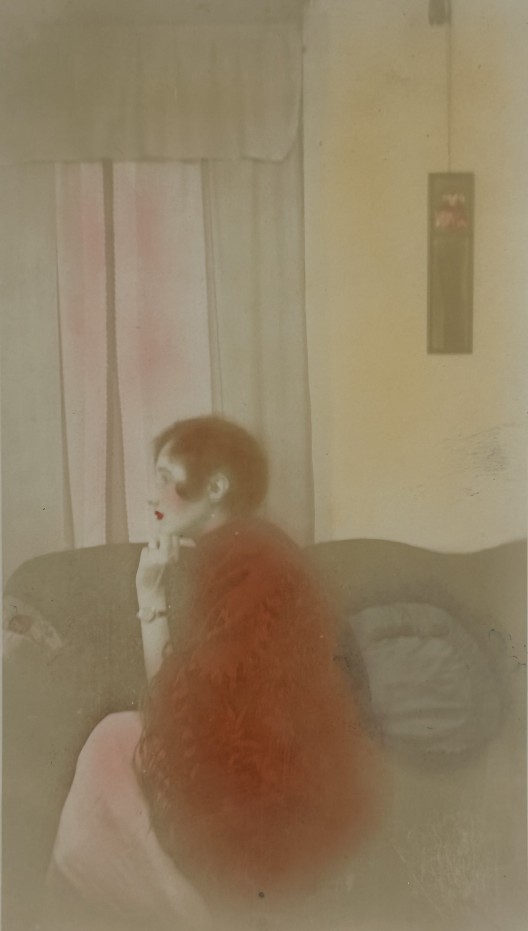
Nel 1835, quattro anni prima che a Parigi venisse annunciata l’invenzione della fotografia, Ralph Waldo Emerson, filosofo e poeta americano, aveva predetto: «Our age is ocular». La nostra è l’età degli occhi, l’età dello sguardo che tutto vuole scoprire e conservare, da quando non solo è apparsa la fotografia, ma da quando nel 1888 George Eastman, fondatore dell’impero Kodak, ha reso la stessa fotografia alla portata di tutti. Democrazia della bellezza, democrazia del ricordo, democrazia dell’essere qui e ora. Le ottanta immagini anonime americane che la galleria THE POOL NYC presenta, e che sono state scelte da Francesca Malgara, raccontano lo straordinario sodalizio che dalla metà dell’Ottocento agli anni ’60 ha fatto della cultura degli Stati Uniti una cultura “ocular”, una festa quotidiana dove ogni volto, ogni corpo, ogni incontro, ogni sorriso, ogni impronta, ogni frontiera, ogni bacio è diventato immagine.
Da questa scioltezza visiva, da questa immaginazione costantemente all’erta, ma anche da questa innocenza che senza pretese artistiche registra la vita, nasce uno stile unico al mondo. Uno stile che si è nutrito di grande cinema hollywoodiano e che i grandi fotografi dagli anni ’50 agli anni ’70 hanno fatto loro. Nella ricchezza di riferimenti e di possibili citazioni THE POOL suggerisce un gioco: riconoscere in queste immagini anonime una possibile origine “colta”. Gli indizi sono moltissimi e, ispirandosi al principio dell’equivalent di Alfred Stieglitz, si possono intravedere tracce di Dorothea Lange, Walker Evans, Robert Frank, Diane Arbus, William Eggleston, Joel Peter Witkin, Mary Ellen Mark, Andy Warhol. Nel cielo infinito delle immagini cartacee, prodotte dalla fine dell’Ottocento all’avvento del digitale, le fotografie anonime sono immagini “equivalenti”, appunto, perché una fotografia anonima, spesso, è un piccolo capolavoro.